A warm shower is especially welcome during winter. But if your electric shower suddenly feels cold, runs hot and cold, or loses pressure, colder weather may be part of the problem.
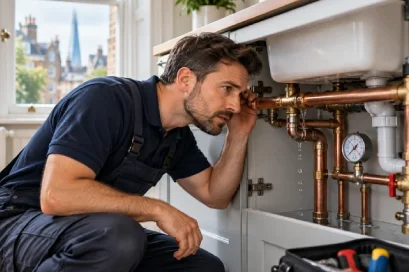
If pipes freeze or partially freeze, water pressure can drop. This can affect shower flow and temperature. Check that external pipework and pipework in the loft are properly insulated before winter. It is also worth knowing where your stop cock and isolation valves are in case a pipe bursts.
- Content Guide
- » Why Does an Electric Shower Feel Colder in Winter?
- » Common Electric Shower Problems in Winter
- - Tepid or Intermittent Water Flow
- - Water Leaks
- - Freezing Cold Water
- - Extremely Hot Water
- - Electrical Problems
- - Shower Does Not Work
- - Shower Stays On
- » Can You Repair an Electric Shower Yourself?
- » When to Call a Professional
Why Does an Electric Shower Feel Colder in Winter?
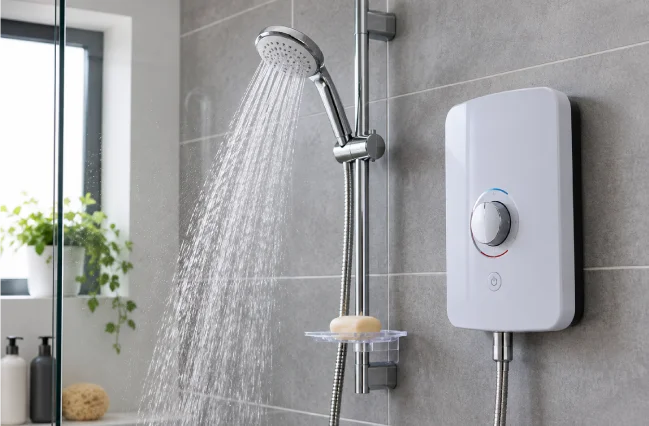
Electric showers heat cold mains water as it passes through the unit. When the incoming water is colder, the shower has to work harder to reach the selected temperature.
This can make an electric shower feel cooler in winter or reduce the flow needed to maintain the temperature. So, if you are wondering why your electric shower is cold in winter, colder incoming water is one possible reason.
However, a shower that is suddenly freezing cold, repeatedly runs hot and cold, or develops another fault may need professional attention.
Common Electric Shower Problems in Winter
Tepid or Intermittent Water Flow
If the water is only lukewarm or the flow keeps changing, there could be a fault with the shower.
A faulty microswitch can restrict power to the heating elements. A damaged or burnt-out element can also stop the shower reaching its normal temperature.
If the temperature fluctuates between hot and cold, check that the valves supplying the property and shower are fully open. A shower head clogged with limescale can also restrict flow.
If the problem continues, the shower's internal flow valve or solenoid valve may need replacing or repair.
Water Leaks
A loose connection or kinked hose can stop water reaching the shower head properly. A damaged hose may need replacing.
If the leak is coming from inside the shower unit, do not remove the casing. Arrange a professional inspection instead.
Freezing Cold Water
If your electric shower is freezing cold, the thermal cut-out (TCO) could have operated. This safety device cuts power to the heating elements if the shower overheats.
If the TCO has operated, there is a reason for it. Avoid repeatedly resetting the shower and arrange a professional inspection to find the cause.
Extremely Hot Water
A shower that suddenly becomes extremely hot could have a faulty microswitch or heating element.
This should be checked rather than ignored, particularly if the temperature cannot be controlled properly.
Electrical Problems
If you smell burning when you turn on the shower, switch it off and arrange a professional inspection.
Electric showers combine water and electricity, so electrical faults should be diagnosed and repaired by a suitably qualified professional
Shower Does Not Work
If your electric shower does not turn on, a fault with the solenoid valve coil could be responsible.
Electric shower repairs can involve both plumbing and electrical work. Make sure the person carrying out the repair has the appropriate qualifications.
Shower Stays On
An electric shower can sometimes fail to shut off, leaving the water running continuously. A defective solenoid valve may be responsible.
The solenoid may need replacing, but the fault should be diagnosed properly first.
Can You Repair an Electric Shower Yourself?
Minor jobs such as removing limescale from a shower head may be suitable for DIY.
Removing the shower casing is different. You may be dealing with both water and electrical components, so internal faults are best left to a qualified professional.
When to Call a Professional
If your electric shower stays cold, repeatedly runs hot and cold, leaks, trips the electrical supply or smells of burning, arrange a professional inspection.
A qualified engineer can identify the fault and advise whether the shower needs repairing or replacing. Serviceteam provides shower repair support for faults including poor flow, leaks, temperature problems and electrical issues.
For related help with bathroom fittings, you can also see our shower, tap and bathroom fittings services.
If the shower needs repair rather than a simple adjustment, see our electric shower repair service to arrange professional help.