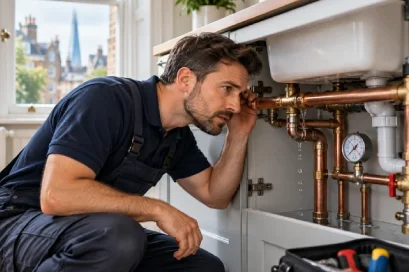
A faulty shower does not always need replacing. If the problem is limited to a leaking connection, faulty valve, damaged sealant or another individual component, shower repair may be the simpler and more cost-effective option. Shower faults can involve different fittings and components, which is also why it's worth exploring our wider guide to bathroom fittings and shower services.
Replacement can make more sense when the shower is old, has several recurring problems, has damaged surfaces or relies on parts that are difficult to source. The right choice depends on the condition of the shower, the cause of the problem and how long you want the solution to last.
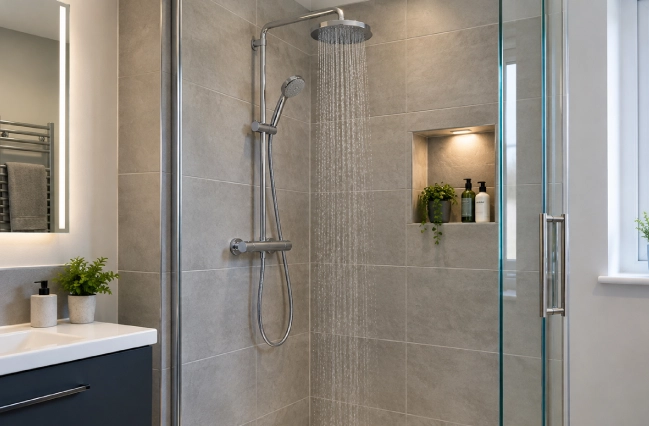
- Content Guide
- » Should You Repair or Replace Your Shower?
- » When Is Shower Repair the Better Option?
- - Minor leaks and faulty connections
- - Shower valves, controls and fixtures
- - Poor water pressure or temperature problems
- - Damaged sealant or mastic
- » When Should You Replace Your Shower?
- - The shower is old or repeatedly failing
- - Parts are difficult to source
- - Cracks or significant water damage
- - You want better performance or modern features
- » Shower Repair vs Replacement: Pros and Cons
- - Pros and cons of shower repair
- - Pros and cons of shower replacement
- » How Much Does Shower Repair or Replacement Cost?
- » How to Choose Between Shower Repair and Replacement
- » When to Call a Professional for Shower Repairs
- » Shower Repair Services in London
When Is Shower Repair the Better Option?
Shower repair is usually worth considering when the main shower system is still in good condition and the problem can be isolated to a particular component.
Minor leaks and faulty connections
A leaking shower does not necessarily mean the whole unit needs replacing. The cause could be a worn connection, faulty fitting, seal or valve. Repairing the affected part can stop the leak without the cost and disruption of a complete replacement. Leaks should not be ignored. Water getting behind bathroom fittings or damaged areas can lead to further problems over time.
Shower valves, controls and fixtures
A faulty shower valve or control can affect how well the shower regulates water flow and temperature. In some cases, replacing the affected component is enough to restore normal operation. The same applies to certain shower heads, connections and other individual fittings. A professional inspection can help establish whether the fault is limited to one component or part of a wider problem.
Poor water pressure or temperature problems
Inconsistent water pressure or temperature can make a shower difficult to use. The cause is not always the shower itself. It may relate to the valve, connections or wider plumbing system. Where the underlying issue can be identified and repaired, there may be no need for a full shower replacement.
Damaged sealant or mastic
Old or damaged sealant around a shower can allow water to reach areas where it should not. If the shower and surrounding surfaces are otherwise sound, replacing the damaged sealant may resolve the problem. However, if water has already caused significant damage or there are cracks in the shower enclosure or tray, more extensive work may be required.
When Should You Replace Your Shower?

A shower replacement may be the better choice when repairs are becoming frequent or the existing system is no longer practical to maintain.
The shower is old or repeatedly failing
Older showers can develop several problems at the same time. If you are repeatedly paying for repairs and new faults keep appearing, replacement may provide a more practical long-term solution. This is particularly worth considering when replacement parts are becoming harder to find.
Parts are difficult to source
Some older shower systems use components that are no longer readily available. If the correct replacement part cannot be sourced, repairing the existing shower can become difficult or uneconomical. A newer shower can also make future servicing easier because replacement components are more readily available.
Cracks or significant water damage
Cracked tiles, damaged shower trays or other damaged surfaces should be taken seriously. Water can pass through damaged areas and affect the surrounding structure. Dampness and persistent musty smells can also indicate that water is getting where it should not. A professional should assess the extent of the damage before you decide whether a repair or replacement is appropriate.
You want better performance or modern features
Replacement can also be worth considering when your existing shower no longer provides the performance you need. A new shower may offer improved controls, updated fittings and features that suit your bathroom and water system better. However, upgrading purely for appearance is different from replacing a shower because it has failed. Consider the condition of the existing installation and the work involved before making a decision.
Shower Repair vs Replacement: Pros and Cons
There is no single answer that applies to every shower. Both options have advantages and drawbacks.
Pros and cons of shower repair
Repair can be a good choice when the fault is localised.
Pros include:
- Lower upfront cost than many full replacements
- Less disruption to your bathroom
- A quicker solution for straightforward faults
- No need to replace a shower that is otherwise in good condition
The main drawback is that a repair may only address the immediate fault. If the shower is old or has several underlying problems, further repairs may be needed later. It can also be difficult to match or source parts for some older shower systems.
Pros and cons of shower replacement
Replacement provides an opportunity to address an ageing or unreliable shower as a whole.
Potential benefits include:
- A new shower system and fittings
- Modern controls and features
- A refreshed bathroom appearance
- A longer-term solution where the existing shower is no longer reliable
The main disadvantages are the higher upfront cost and the potential for greater disruption. A replacement can also involve additional work if the existing plumbing, fittings or surrounding surfaces need to be changed.
How Much Does Shower Repair or Replacement Cost?
The cost depends on what has failed and how much work is required. A straightforward repair to one component is likely to involve less work than replacing an entire shower system. Replacement costs can vary depending on the shower selected, the existing installation and whether additional plumbing or electrical work is required. Rather than choosing based on price alone, compare the likely cost of repairing the existing shower with the cost and expected lifespan of a replacement. A professional assessment can help you understand which option is practical before work starts.
How to Choose Between Shower Repair and Replacement
A simple way to approach the decision is to consider five questions:
- How old is the shower?
- What exactly has failed?
- Has the shower been repaired before?
- Are replacement parts still available?
- Is there any cracking, dampness or water damage?
If the shower is generally in good condition and the fault is isolated, repair is often the sensible starting point. If the shower is old, repeatedly failing or affected by significant damage, replacement may be more suitable. If you are unsure, have the shower inspected before committing to either option.
When to Call a Professional for Shower Repairs

Some shower faults are straightforward, but the visible problem does not always show the underlying cause. For example, a leak could come from a connection, valve, seal or another part of the installation. Persistent problems with temperature or water pressure may also require a wider inspection. A professional can identify the fault and advise whether repair or replacement is the more appropriate option. If you are looking for shower repairs in London, choosing an experienced local service can also make it easier to arrange an inspection and get the problem dealt with promptly.
Shower Repair Services in London
If your shower is leaking, failing to regulate temperature, suffering from poor water pressure or developing another fault, Serviceteam can assess the problem and advise on the most suitable solution. Where a repair is practical, repairing the affected component can avoid the unnecessary cost and disruption of replacing the entire shower. If the shower is beyond economical repair, replacement may be the better option. The aim is to identify the actual problem first, then choose the solution that makes sense for the condition of the installation.