Saniflo macerators provide a practical way to install toilets and other sanitary appliances where conventional gravity drainage is difficult or expensive. A macerator receives wastewater, breaks down solid waste and pumps the resulting waste through a discharge pipe to the drainage system. Like any mechanical plumbing system, a Saniflo can develop problems. Blockages, limescale, poor maintenance and mechanical faults can all affect performance.
This guide explains how a Saniflo macerator works, how to open one for maintenance, how to unblock and clean it, how often maintenance should be carried out and what a Saniflo macerator may cost. If your Saniflo has stopped working or is repeatedly blocking, professional Saniflo macerator repair may be a better option than attempting to dismantle the unit yourself.
- Content Guide
- » How Does a Saniflo Macerator Work?
- - What Are the Main Parts of a Saniflo Macerator?
- - How Does a Saniflo Macerator Pump Wastewater?
- - What Are the Benefits of a Saniflo Macerator?
- » How to Open a Saniflo Macerator
- - Before Opening a Saniflo Macerator
- - Steps to Open a Saniflo Macerator
- - When to Call a Saniflo Engineer
- » How to Unblock a Saniflo Macerator
- - Safety Before Clearing a Blockage
- - Steps to Unblock a Saniflo Macerator
- - What If the Saniflo Is Still Blocked?
- » How to Clean a Saniflo Macerator
- - How Often Should a Saniflo Macerator Be Cleaned?
- - Saniflo Cleaning and Descaling Steps
- » Saniflo Maintenance: What Should You Do?
- - Regular Macerator Maintenance
- - Signs Your Saniflo Needs Attention
- » How Much Does a Saniflo Macerator Cost?
- - Saniflo Unit Costs
- - Installation Costs
- » Saniflo Macerator Repairs and Professional Help
- » Frequently Asked Questions About Saniflo Macerators
How Does a Saniflo Macerator Work?
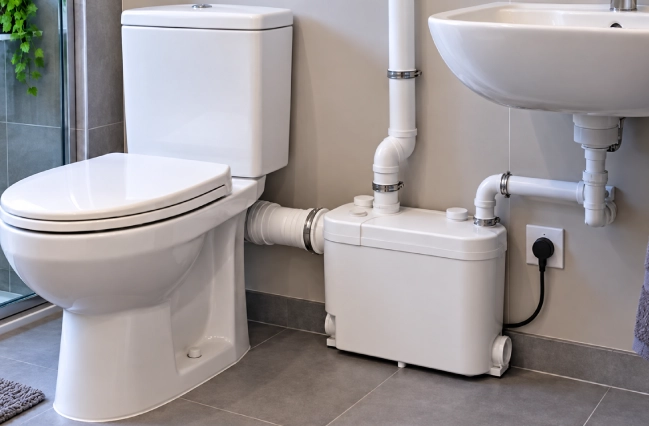
A Saniflo macerator is designed to remove wastewater from toilets, sinks, showers and other connected appliances when conventional drainage arrangements are not practical. When a toilet is flushed or water enters from a connected appliance, the wastewater flows into the macerator. The internal macerating mechanism breaks down solid waste before the pump moves it through the discharge pipe. This allows wastewater to be transported away from the appliance without relying entirely on a traditional gravity-fed drainage route.
What Are the Main Parts of a Saniflo Macerator?
The main components include:
- Macerating unit — contains the motor and internal mechanism used to break down waste.
- Inlet ports — receive wastewater from connected appliances such as toilets, sinks and showers.
- Pump — moves the processed wastewater through the discharge pipe.
- Discharge pipe — carries wastewater towards the property's drainage or sewer connection.
The exact arrangement depends on the Saniflo model and installation. Always refer to the manufacturer's instructions for your particular unit.
How Does a Saniflo Macerator Pump Wastewater?
The process is relatively straightforward:
- Wastewater enters the macerator through an inlet.
- The macerating mechanism breaks down solid waste.
- The waste is mixed with water to form a pumpable mixture.
- The pump activates and moves the wastewater through the discharge pipe.
- The wastewater reaches the property's drainage or sewer system.
The pump can move wastewater vertically and horizontally within the limits specified for the particular model and installation.
What Are the Benefits of a Saniflo Macerator?
A Saniflo system can be useful where installing conventional drainage would require significant building work.
The main benefits include:
- Space-saving installation
- Less extensive plumbing alteration
- Suitable for some basement or difficult-to-drain bathrooms
- Flexible positioning of sanitary appliances
- Faster installation in some situations
- Ability to serve certain toilets, sinks, showers and other appliances
However, a macerator still needs correct installation and regular maintenance. It should not be treated as a completely maintenance-free alternative to conventional drainage.
How to Open a Saniflo Macerator
Knowing how to open a Saniflo macerator can be useful when maintenance or troubleshooting is required. However, opening the unit exposes internal mechanical and electrical components. If you are unfamiliar with the model or the fault, it is safer to use a qualified Saniflo engineer.
The manufacturer's instructions for your specific model should always take priority.
Before Opening a Saniflo Macerator
Safety comes first.
Before carrying out any work:
- Isolate the electrical supply to the macerator.
- Turn off the relevant water supply.
- Clear the area around the unit.
- Wear suitable protective gloves and clothing.
- Have a suitable container available if water needs to be drained.
- Check the manufacturer's instructions for the model.
Never work on an electrically powered macerator while it is connected to the power supply.
Steps to Open a Saniflo Macerator
The general process for opening a Saniflo macerator is:
- Turn off and isolate the electrical supply.
- Prepare enough workspace around the macerator.
- Remove the screws securing the cover or casing.
- Carefully lift the cover.
- Check the internal components for obvious blockages or other issues.
- Carry out only the maintenance permitted by the manufacturer's instructions.
- Refit the cover correctly.
- Replace and secure the screws without overtightening.
- Restore the power once the unit has been fully reassembled.
- Test the system carefully.
The exact construction differs between Saniflo models, so do not force the casing or internal components. If the unit does not operate correctly after reassembly, stop using it and arrange professional assistance.
When to Call a Saniflo Engineer
Professional help is sensible if:
- You cannot identify the cause of the problem.
- The macerator is not starting.
- The pump runs continuously.
- The unit is leaking.
- The macerator repeatedly blocks.
- There is an electrical fault.
- The unit still does not work after basic maintenance.
- You are uncomfortable opening the casing.
Attempting to repair an unfamiliar macerator can turn a relatively simple fault into a more expensive repair.
How to Unblock a Saniflo Macerator

A blockage can affect the macerator's ability to receive or discharge wastewater. Before attempting to clear a blockage, isolate the power and water supply. Wear protective equipment and take care when disconnecting pipes, as residual wastewater may remain inside the system.
Safety Before Clearing a Blockage
Before starting:
- Disconnect the macerator from the electrical supply.
- Isolate the water supply to the toilet.
- Wear protective gloves and suitable protective clothing.
- Keep a container ready for residual water.
- Protect the surrounding floor from wastewater.
- Follow the manufacturer's instructions for your model.
Do not continue if you suspect an electrical fault or a serious mechanical problem.
Steps to Unblock a Saniflo Macerator
The general procedure is:
- Isolate the electrical supply.
- Turn off the water supply to the toilet.
- Remove excess water from the WC where possible.
- Position a container beneath the relevant pipework.
- Carefully loosen the pipe connections so residual water can drain.
- Inspect the pipework for an obvious blockage.
- Clear accessible blockages using an appropriate method.
- Check the toilet connector for obstruction.
- Check the macerator's waste entry area for blockage.
- Reassemble the pipework and macerator correctly.
- Restore the water supply.
- Reconnect the electrical supply.
- Allow the cistern to refill before testing the flush.
Use warm water for clearing accessible blockages and cleaning affected pipework. Avoid forcing objects into the macerator or using unsuitable chemicals that could damage components.
What If the Saniflo Is Still Blocked?
A blockage that keeps returning can indicate a deeper problem. There may be an obstruction further along the discharge pipe, a problem with the pump or macerating mechanism, or an installation issue. If basic clearing does not restore normal operation, professional Saniflo macerator repair is the safer option. If your Saniflo is connected to a toilet, sink or other appliance that is also affected by a wider drainage blockage, the problem may not be limited to the macerator itself.
How to Clean a Saniflo Macerator
Regular cleaning helps reduce limescale and maintain the performance of the system. Saniflo cleaning should be carried out using a suitable product and according to the manufacturer's instructions.
How Often Should a Saniflo Macerator Be Cleaned?
The required cleaning frequency depends partly on water hardness and how heavily the system is used.
As a general guide:
- Hard water areas: approximately once a month.
- Normal water conditions: approximately every three months.
- Soft water areas: approximately every six months.
If your macerator shows signs of limescale build-up or reduced performance, it may need attention sooner.
Saniflo Cleaning and Descaling Steps
A general cleaning process is:
- Disconnect the macerator from the electrical supply.
- Use a suitable Saniflo-compatible cleaning or descaling product.
- Pour the recommended amount into the WC.
- Allow the product to work for the period stated by the product or manufacturer's instructions
- Do not flush the toilet while the cleaning solution is working.
- Restore the electrical supply when appropriate.
- Flush the WC twice to rinse the system.
Do not assume that a stronger chemical or longer treatment will produce a better result. Use a product suitable for the macerator and follow its instructions.
Saniflo Maintenance: What Should You Do?
Saniflo maintenance is important because the unit contains moving and electrical components as well as pipework that can become restricted. Good macerator maintenance is mainly about preventing avoidable problems rather than waiting for the system to fail.
Regular Macerator Maintenance
Useful maintenance measures include:
- Clean and descale the system at suitable intervals.
- Follow the manufacturer's cleaning recommendations.
- Avoid putting unsuitable items into a macerator toilet.
- Pay attention to unusual noises.
- Check for leaks.
- Watch for changes in flushing or pumping performance.
- Deal with minor problems before they become recurring faults.
- Arrange professional servicing if the unit repeatedly blocks or malfunctions.
Regular maintenance can help reduce the build-up of limescale and debris.
Signs Your Saniflo Needs Attention
Your macerator may need maintenance or repair if you notice:
- Unusual or louder-than-normal noises.
- Slow drainage.
- Repeated blockages.
- The pump running for longer than usual.
- The pump continuing to run after flushing.
- Water backing up.
- Leaks around the unit or connections.
- A complete loss of operation.
A recurring fault should not simply be reset or cleared repeatedly. Finding the underlying cause can prevent further damage and disruption.
How Much Does a Saniflo Macerator Cost?
The cost of a Saniflo macerator depends on the model, installation requirements and complexity of the work. There are normally two main costs to consider: the unit itself and the labour and materials needed to install it.
Saniflo Unit Costs
A Saniflo toilet system typically costs in the region of £200 to £500. The actual price will depend on the model and its specification.
Installation Costs
Installation costs vary depending on the property and the work involved. A typical installation budget for a macerating toilet is in the region of £500 to £800, although actual costs can vary significantly.
Factors that can affect the price include:
- The type of Saniflo system.
- The location of the toilet or appliance.
- The discharge pipe arrangement.
- Access to the installation area.
- Required plumbing alterations.
- Additional materials.
- The complexity of the installation.
For an accurate price, the installation needs to be assessed based on the specific property and system.
Saniflo Macerator Repairs and Professional Help

Saniflo macerators are useful systems, but they are not immune to blockages, limescale or mechanical faults. Some basic maintenance can be carried out by a property owner where the manufacturer's instructions allow it. More involved work should be handled by an experienced engineer. Serviceteam provides Saniflo macerator repair and installation services in London. If your unit is blocked, leaking, making unusual noises or failing to pump correctly, professional diagnosis can help identify the cause.
For repairs, see our Saniflo macerator repair service. If the issue involves a blocked toilet or sink as well as the macerator, our fixed-price toilet and sink unblocking service may also be relevant. You can also explore our wider blocked drains, toilets and Saniflo guidance for related advice.
Frequently Asked Questions About Saniflo Macerators
Can I open a Saniflo macerator myself?You can access a Saniflo macerator for basic maintenance where the manufacturer's instructions permit it, but the unit should first be isolated from the electrical supply. If you are unsure about the model, fault or internal components, use a qualified engineer.
How often should a Saniflo macerator be maintained?Maintenance requirements vary according to the model, water hardness and usage. Regular cleaning and descaling can help reduce limescale and keep the system operating properly.
What causes a Saniflo macerator to block?Blockages can occur in the toilet connector, inlet area, discharge pipe or within the macerator itself. Incorrect items being flushed, debris and limescale can all contribute to problems.
Can I use normal toilet cleaner in a Saniflo?Use only cleaning products that are suitable for your Saniflo system and follow the manufacturer's recommendations. Some unsuitable chemicals can damage components.
Why does my Saniflo keep running?A macerator that continues running after flushing may have a blockage, switch or mechanical issue, or another fault affecting its normal operation. If basic maintenance does not resolve the problem, arrange a professional inspection.
How long does a Saniflo macerator last?The service life depends on the model, installation, usage and maintenance. Regular cleaning and correct use can help maintain performance, but mechanical components can eventually require repair or replacement.
Is it better to repair or replace a Saniflo macerator?That depends on the fault, age and condition of the unit. A straightforward repair may be appropriate where the main components remain in good condition. An engineer can assess whether repair or replacement makes more sense.