If you live in a hard water area, a water softener may be worth considering. It reduces the calcium and magnesium responsible for conventional limescale, helping to keep taps, kettles, showers and other water-using appliances cleaner. Whether a softener makes sense for your home depends on your local water hardness, household water use, the system you choose and its installation and maintenance costs. This guide explains how hard water affects your home, how water softeners differ from filters, what to consider when choosing a system and how to maintain one. It also explains when professional installation or repairs may be needed.
- Content Guide
- » London Water Hardness: Is a Hard Water Softener Worth It?
- - What problems can hard water cause?
- - What are the practical benefits of a water softener?
- - Is a water softener right for your home?
- » Types of Water Softeners: Which System Should You Choose?
- - Salt-based ion-exchange softeners
- - Single-cylinder and twin-cylinder systems
- - Salt-free scale-reduction devices
- - What about water filters?
- » Water Softener Installation: What Is Involved?
- - Drinking water and plumbing compliance
- » Water Softener Cost: What Should You Budget For?
- - Is the cheapest system the best value?
- » Water Softener Maintenance, Servicing and Repairs
- - Water softener maintenance tips
- - Salt bridging and salt mushing
- - How to service a water softener
- - Water softener repairs: common warning signs
- » Frequently Asked Questions
- » Arrange Water Softener Installation with Serviceteam
London Water Hardness: Is a Hard Water Softener Worth It?

Hard water contains dissolved minerals, mainly calcium and magnesium. These occur naturally as water passes through chalk and limestone. When hard water is heated or evaporates, it can leave limescale on taps, showerheads, kettles and other surfaces. Thames Water confirms that hard water is common across its South East supply region. However, water hardness varies by location, so check the published water quality information for your postcode rather than assuming every London property receives water of the same hardness.
What problems can hard water cause?
Common signs include:
- White, chalky deposits around taps and showerheads.
- Limescale building up inside kettles and other appliances that heat water.
- Soap and shampoo producing less lather.
- Spots on glassware and more time spent cleaning bathroom fittings.
- Scale accumulating in hot water equipment over time.
These problems do not necessarily mean your plumbing is faulty. They may simply reflect the mineral content of your water.
A conventional water softener can reduce the minerals responsible for limescale. It will not repair existing damage, remove every contaminant or automatically improve the taste of drinking water.
What are the practical benefits of a water softener?
A conventional ion-exchange water softener reduces calcium and magnesium in the treated water. This can help limit further limescale formation, make cleaning easier and improve soap lathering. Reducing scale deposits may also help protect water-using appliances from scale-related problems. However, a softener cannot guarantee longer appliance lifespans, lower energy bills or specific financial savings. Whether a water softener is worthwhile depends on how much limescale you experience, your household's water use, the system's purchase and installation price and its ongoing running costs.
Is a water softener right for your home?
Before choosing a system, consider four questions:
- How hard is the water at your property?
- How much limescale are you dealing with?
- Which system suits your household's water demand and budget?
- Can you accommodate the equipment and its ongoing maintenance?
A softener may be worth considering if limescale is a persistent problem. It may be less attractive if you experience little scale, have limited installation space or do not want the ongoing cost of salt and servicing. There is no universal payback period. Compare the likely costs with the problems you want to address rather than relying on guaranteed savings.
Types of Water Softeners: Which System Should You Choose?
Different systems suit different properties and budgets. The most important distinction is between conventional ion-exchange softeners and products marketed as salt-free or scale-reduction devices.
Salt-based ion-exchange softeners
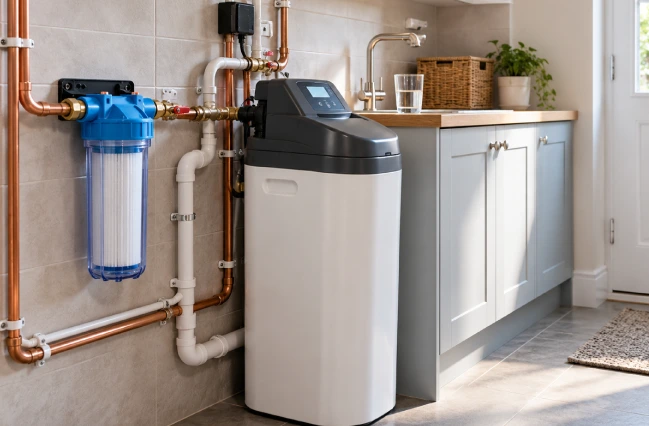
These conventional water softeners pass water through a resin that exchanges calcium and magnesium ions for sodium ions. The resin periodically regenerates using salt and water. They are commonly used where households want to reduce water hardness across their plumbing. The system needs sufficient space, access for salt replenishment and suitable drainage.
Single-cylinder and twin-cylinder systems
A single-cylinder system may suit a smaller household with moderate water demand. Depending on its design, softened-water production may be interrupted during regeneration. Twin-cylinder systems can provide a more continuous supply because one cylinder can remain in service while the other regenerates. They may suit larger households or properties with higher demand, although they usually cost more. The appropriate capacity depends on the number of occupants, household water use and local water hardness. A larger system is not automatically the better choice.
Salt-free scale-reduction devices
Some products marketed as salt-free softeners aim to reduce scale formation without removing calcium and magnesium in the same way as ion exchange. These products should not automatically be treated as equivalent to conventional water softeners. Check the manufacturer's claims, the available evidence and the product's suitability for the intended application. Magnetic descalers are also different from conventional ion-exchange softeners. Do not assume they produce genuinely softened water.
What about water filters?
Water softeners and water filters serve different purposes. A softener targets water hardness, while a filter's function depends on its technology and the substances it is designed to reduce.
Common household filters include:
- Activated-carbon filters: generally used to improve taste and odour. Replace the cartridge as the manufacturer directs, or the filter may stop working properly.
- Sediment filters: designed to trap particles such as grit or rust flakes. They do not soften water.
- Reverse osmosis systems: remove most dissolved solids, including hardness minerals, but they produce waste water. The Drinking Water Inspectorate says they should be considered only for specialist domestic purposes.
No filter or softener removes every contaminant, so check what a product is designed to do before you buy. A softener should not be bought as a general solution to suspected contamination or an unusual water taste. If you have concerns about your drinking water, consult your water supplier's published quality report first. The Drinking Water Inspectorate's guidance on domestic filters and softeners explains the differences in more detail.
Water Softener Installation: What Is Involved?
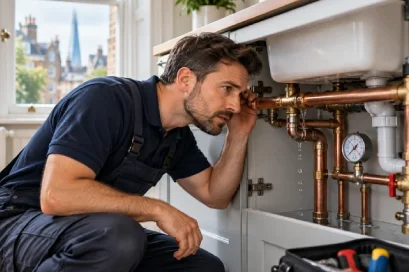
Installing a water softener involves more than connecting a unit to a pipe. The installer needs to assess the existing plumbing, select a suitable position and make provision for drainage, servicing and any required bypass arrangements. A suitable location may be under a sink, in a utility area, in a cupboard or elsewhere with sufficient access, depending on the equipment and property layout.
The main considerations include:
- Water supply and demand: Assess local hardness and household water use before selecting the system.
- Space and access: Allow room for the unit, any separate brine tank, maintenance and salt replenishment.
- Pipework and fittings: Check that the connections are suitable for the chosen system and existing plumbing.
- Drainage and overflow: Provide the connections required by the manufacturer's installation instructions.
- Power supply: Some models require an electrical connection.
- Commissioning: Set up and test the system according to the manufacturer's instructions.
Older homes, restricted access and additional pipework can make installation more involved. For detailed fitting information, see our water softener installation guide.
Drinking water and plumbing compliance

Most conventional ion-exchange softeners replace calcium and magnesium with sodium. The amount of sodium added depends on the water's hardness and the system's operation. The Drinking Water Inspectorate advises retaining an unsoftened supply to the kitchen tap for drinking and cooking. Artificially softened water should not be used to make up baby feeds. People following a low-sodium diet should seek appropriate advice about their drinking water. The Water Supply (Water Fittings) Regulations 1999 set requirements for water fittings, including preventing contamination and avoiding waste. Use a qualified plumber familiar with the relevant requirements and the chosen equipment. If you need a new system fitted or an existing unit replaced, see our professional water softener installation service in London.
Water Softener Cost: What Should You Budget For?
The overall cost of a water softener depends on the equipment, installation complexity and any changes needed to the existing plumbing.
When comparing systems, consider:
- The purchase price and capacity of the unit.
- Labour and any additional pipework or fittings.
- Drainage and other installation requirements.
- Salt replenishment and any electricity or water used during regeneration.
- Routine maintenance, servicing and potential replacement parts.
Salt-based systems have ongoing running costs, but the amount varies with the model, water hardness, settings and household usage. Avoid assuming that a softener will pay for itself within a set period or deliver a guaranteed reduction in household energy bills. For a detailed breakdown of equipment prices, labour and running costs, see our water softener installation cost guide for London.
Is the cheapest system the best value?
Not necessarily. A less expensive unit may suit a smaller household, while a larger household may need a system designed for higher demand. Compare capacity, salt consumption, maintenance requirements, warranty and the availability of replacement parts. Compare like-for-like installation quotes and check what each includes before making a decision.
Water Softener Maintenance, Servicing and Repairs
A water softener needs routine attention to keep working as intended. The maintenance required depends on the design, the manufacturer's instructions and the conditions in which the unit operates.
Water softener maintenance tips
For a conventional salt-based system:
- Check the salt level regularly and replenish it as directed.
- Use the salt type specified by the manufacturer.
- Check accessible hoses, connections and fittings for visible leaks.
- Look for unusual noises, warning lights or error messages.
- Keep the unit accessible and the surrounding area clear.
- Follow the manufacturer's cleaning and hygiene instructions.
- Arrange servicing at the recommended intervals.
Do not assume every softener needs the same cleaning schedule. Avoid changing regeneration settings or dismantling components without understanding the manufacturer's procedure.
Salt bridging and salt mushing

Salt bridging occurs when a hard crust forms above the remaining salt in the brine tank. This can leave an empty space underneath, preventing the salt from dissolving as intended. The tank may appear to contain enough salt even though the system cannot use it properly. Salt mushing is different. It involves a build-up of compacted salt or sludge at the bottom of the tank, which can obstruct the brine system. Check the manufacturer's troubleshooting instructions before attempting to clear either problem. Avoid forcing tools into the tank or damaging internal components. If the obstruction persists, arrange an inspection.
How to service a water softener
Routine salt replenishment does not replace a service where one is recommended. Depending on the make and model, servicing may involve checking operation, inspecting accessible connections, reviewing settings and assessing components according to the manufacturer's procedure. Water softener cleaner may be recommended for certain models. Use a suitable product and follow its instructions for application and any required regeneration cycle. Cleaning frequency varies, so do not rely on a universal three- or four-month schedule. Keep a record of servicing, faults and replacement parts. This can help identify recurring problems and make future repairs easier to diagnose.
Water softener repairs: common warning signs
A water softener may need professional investigation if:
- It continues to produce hard water despite a regeneration cycle.
- It repeatedly displays an error or fails to regenerate.
- You notice persistent leaks or unusual operating noises.
- Salt consumption changes significantly without an obvious explanation.
- Water develops an unusual smell or appearance after passing through the system.
These symptoms do not point to one definite fault. Possible causes include problems with the control valve, regeneration process, brine flow or resin system, but inspection is needed to identify the cause. Check the manufacturer's troubleshooting guidance first. If the problem persists, avoid repeatedly resetting the unit or attempting internal repairs to pressurised pipework. A qualified professional can assess the system and advise whether servicing or replacement is appropriate. If your system needs professional attention, Serviceteam can advise on water softener installation and replacement.
Frequently Asked Questions
Is a water softener good for hard water?A conventional ion-exchange water softener reduces calcium and magnesium in the treated water. This can help limit limescale formation, make cleaning easier and improve soap lathering. Whether it is worthwhile depends on your property and household needs.
How do I check London water hardness?Use Thames Water's published hard-water guidance and water quality information for your postcode. Hardness varies by location, so do not assume every London property has the same water supply.
What is the difference between a water softener and a water filter?A water softener targets hardness minerals, mainly calcium and magnesium. A filter targets substances according to its filtration technology. Neither should be assumed to resolve every water quality issue.
How often should a water softener be serviced?Follow the manufacturer's recommended service intervals. The appropriate schedule depends on the model, its condition and how it is used. Routine salt replenishment is not a substitute for a service where one is required.
How do I know if my water softener needs repairing?Warning signs include persistent leaks, recurring error messages, failure to regenerate, unusual noises or hard water returning after regeneration. Check the manufacturer's guidance and arrange an inspection if the problem persists.
Will a water softener make my drinking water salty?Ion-exchange softeners add sodium to the treated water, and the amount varies. Keep an unsoftened supply for drinking and cooking, following the Drinking Water Inspectorate's guidance. Artificially softened water should not be used to make up baby feeds.
Does a water softener reduce energy bills?A softener can help reduce scale formation, but any effect on energy use depends on the equipment and circumstances. Do not assume a fixed percentage saving or guaranteed payback period.
Arrange Water Softener Installation with Serviceteam
If hard water is causing persistent limescale in your London home, start by checking the local water hardness and identifying the problems you want to address. A professional assessment can help establish whether a softener is suitable, which type may work best and what installation will involve. Serviceteam provides a water softener installation service for London homes, including advice on system suitability and the work required at your property. Contact Serviceteam to discuss your requirements and request a quote for installation or replacement. You can then compare the proposed system, installation work and ongoing maintenance costs before deciding whether to proceed.