Water under bathroom tiles or kitchen floor tiles can be difficult to spot until visible signs appear. Damp grout, loose tiles, musty smells and unexplained moisture can all indicate a problem beneath the surface. The cause could be a leaking pipe, failed waterproofing or water entering from another source. Finding the cause early can help limit damage to your flooring and the surrounding structure. If you're experiencing other plumbing problems, our guide to plumbing leaks and water pressure problems covers related issues and what to look out for.
- Content Guide
- » Signs of Water Leaks Under Tiles
- » What Causes Water Leaks Under Tiles?
- » How to Fix a Leak Under Tiles
- - Locate the Source of the Leak
- - Repair Damaged Pipes or Connections
- - Restore Failed Waterproofing and Tile Seals
- - Address Water Ingress and Drainage Problems
- » How to Prevent Water Leaks Under Tiles
- » What Happens If You Ignore a Leak Under Tiles?
- » Professional Water Leak Detection and Repair in London
- » FAQs
Signs of Water Leaks Under Tiles
Water leaks beneath tiled floors can leave several clues. Look out for the following signs, particularly if the affected area stays damp without an obvious explanation.
Damp or Discoloured Tiles and Grout

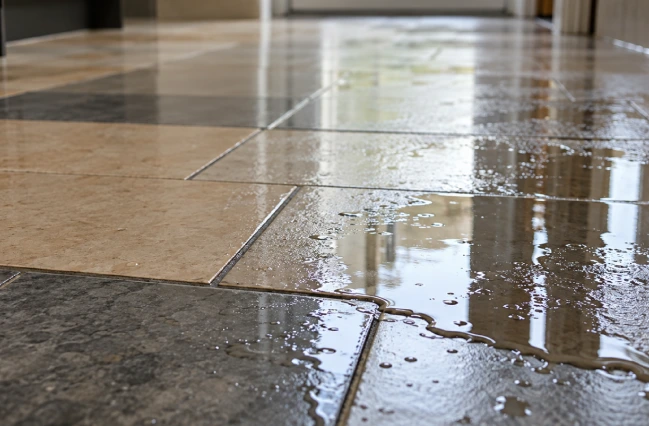
Darker patches, damp grout or persistent moisture on tiled surfaces may indicate water beneath the floor. You might also notice water seeping up through tile grout, especially when the surrounding area appears dry. However, moisture can also come from spills, condensation or water entering through damaged grout. The pattern and location of the dampness can help identify the likely cause.
Loose Tiles or Hollow Sounds
Water can weaken the adhesive or substrate beneath tiles, causing them to loosen or lift. You may notice movement underfoot, gaps between tiles or a hollow sound when tapping the surface. These signs do not always confirm a leak, but they warrant further investigation if accompanied by dampness or other signs of water damage.
Musty Smells and Mould
A persistent musty smell around a bathroom or kitchen floor can indicate trapped moisture. If the area remains damp, mould may develop on grout, nearby walls or other surfaces. Cleaning the affected area may remove the visible signs, but it will not resolve the problem if a leak continues beneath the tiles. The source of the moisture needs to be identified.
Unexplained Increases in Water Bills
A sudden increase in water usage without a clear explanation may indicate a hidden plumbing leak. Compare your latest bills with previous ones and check whether there are other signs of moisture around the property. If your home has a water meter, you can check for a hidden leak by turning off all taps and water-using appliances and seeing whether the meter keeps moving. Our water meter leak guide guide explains the steps. A higher bill alone does not confirm a leak under the tiles. If you suspect a plumbing problem, professional leak detection can help locate the source.
What Causes Water Leaks Under Tiles?
Water beneath tiled floors can come from several sources. Identifying the cause is important because the correct repair depends on where the water is entering.
Damaged Pipes or Plumbing Connections
Ageing, corroded or damaged pipes can develop leaks that allow water to collect beneath tiled floors. Leaking connections serving baths, showers, toilets or kitchen fittings can also allow water to reach the surrounding floor. If dampness keeps returning or appears without a recent spill, a hidden plumbing leak may be responsible.
Failed Grout, Sealant or Waterproofing
Cracked grout, deteriorated sealant and damaged waterproofing can allow water to penetrate beneath tiles, particularly in bathrooms and shower areas. Poor waterproofing during installation can also contribute to the problem. Replacing grout or sealant may help where the failure is localised, but it will not fix a leaking pipe or a damaged waterproofing layer beneath the tiles.
Cracks and Water Ingress
Cracks in the floor, surrounding structure or other building surfaces can provide a route for water to enter. The source may be a plumbing leak or moisture entering from outside the property. The location and pattern of the dampness can help narrow down the cause. Structural cracks or signs of movement may require assessment by an appropriate building specialist.
Groundwater, Heavy Rain and Flooding
Groundwater or heavy rainfall can contribute to damp floors, particularly in basements and ground-floor areas with inadequate protection against water ingress. If the problem appears after heavy rain, consider whether water could be entering from outside rather than from the plumbing system. Drainage, external water ingress and groundwater problems may require a different specialist from a plumber.
How to Fix a Leak Under Tiles
The correct repair depends on the source of the water. Replacing tiles or sealing grout without addressing the underlying problem may only provide a temporary solution. If you suspect a hidden plumbing leak, our water leak detection and repair in London service can trace the source and fix the plumbing fault.
Locate the Source of the Leak
Start by identifying where the moisture is appearing and whether it changes after using the bath, shower, toilet or kitchen sink. Check for damaged sealant, visible pipe leaks and persistent damp patches. Avoid removing tiles unnecessarily before the source has been assessed. A professional can investigate suspected plumbing leaks and determine the most suitable repair.
Repair Damaged Pipes or Connections
If a leaking pipe or plumbing connection is responsible, the damaged section or fitting will need to be repaired or replaced. If a leaking pipe or faulty plumbing connection is the cause, a plumber in London can assess the problem and carry out the necessary plumbing repairs. The amount of work depends on the location of the leak and how accessible the pipework is. Where pipes are concealed beneath tiles, some access work may be necessary before the repair can be completed. Once the plumbing repair is finished, the affected area should be checked for further signs of leakage before the floor is reinstated.
Restore Failed Waterproofing and Tile Seals
If water is entering through failed grout, sealant or waterproofing, the affected materials may need to be replaced. Minor deterioration may be resolved by renewing grout or sealant. More extensive failures can require removing affected tiles, repairing the underlying surface and reinstating the waterproofing system. The repair should address the extent of the damage rather than simply covering the visible symptoms.
Address Water Ingress and Drainage Problems
If the moisture is coming from groundwater, heavy rain or external water ingress, repairing internal plumbing will not solve the problem. The source of the water needs to be established before choosing a solution. Depending on the findings, drainage improvements, external repairs or specialist damp-proofing work may be necessary.
How to Prevent Water Leaks Under Tiles

Regular checks can help identify problems before they cause extensive damage.
- Inspect grout and sealant at least once a year. Look for cracks, gaps or deterioration, particularly around baths, showers and other areas exposed to frequent water.
- Use suitable waterproofing materials during bathroom and kitchen renovations. Waterproof membranes, adhesives and grout should be appropriate for the intended application.
- Address plumbing problems promptly. Dripping connections, persistent dampness and unexplained changes in water usage should not be ignored.
- Keep bathrooms properly ventilated. Good ventilation helps reduce condensation, although it will not fix a plumbing leak.
- Check for early signs of water damage. Loose tiles, damp patches and recurring musty smells may indicate a problem that needs further investigation.
- Maintain plumbing fittings and connections. Pay attention to the areas around showers, baths, toilets and kitchen sinks where water can escape unnoticed.
These steps can reduce the risk of avoidable water damage, but they cannot prevent every leak. If signs of moisture persist, investigate the source rather than relying on surface repairs.
What Happens If You Ignore a Leak Under Tiles?
A leak that continues beneath tiled flooring can cause damage beyond the visible surface.
Mould and Mildew Growth
Persistent moisture creates conditions in which mould can develop on grout, walls and other materials. The affected area may develop a musty smell and require additional cleaning or remediation.
Damage to Flooring and Surrounding Materials
Prolonged water exposure can weaken tile adhesive, damage grout and deteriorate the materials beneath the floor. Depending on the construction, moisture may also affect nearby walls, ceilings or timber components. The longer the source remains unresolved, the greater the potential for additional repair work.
Electrical Hazards
Water reaching electrical wiring, sockets or other electrical components can create a safety risk. If you suspect water has reached electrical equipment, avoid touching wet components and seek appropriate professional help.
Slips and Falls
Water on tiled surfaces can make floors slippery. Loose or lifted tiles can also create uneven surfaces that increase the risk of trips and falls. Keep the affected area safe while the cause is being investigated and repaired.
Further Property Damage
A persistent leak can spread beyond the original damp patch, damaging finishes and materials in adjoining areas. Early investigation can help limit the extent of the damage and the work required to put it right.
Professional Water Leak Detection and Repair in London
If you suspect a leak beneath your bathroom or kitchen tiles, finding the source is the first step towards a lasting repair. Serviceteam provides emergency water leak repairs in London. Our plumbers can trace the source of a suspected plumbing leak and fix the fault. The repair will depend on the cause and accessibility of the leak. Serviceteam's plumbers repair the leaking pipe or fitting. Reinstating tiles, waterproofing and decoration are separate from the plumbing repair and may need a tiler or other specialist, and water entering from outside the property may need a drainage or damp specialist. If you have noticed damp grout, loose tiles or recurring moisture, contact Serviceteam about a water leak to discuss the problem and arrange an assessment.
FAQs
How Can You Find a Water Leak Under a Tiled Floor?Look for damp or discoloured tiles, water seeping through grout, loose tiles and persistent musty smells. These signs can indicate trapped moisture, although they do not confirm a leak on their own. A professional leak detection assessment can help identify the source.
Who Can Check for Water Leaks?A plumber or water leak detection specialist can investigate suspected plumbing leaks and recommend suitable repairs. If the water is entering from outside the property or through structural defects, another specialist may be needed.
Can Water Leak Through Tiles and Grout?Yes. Water can pass through damaged grout, failed sealant or compromised waterproofing. Tiles and grout alone do not guarantee that a floor is watertight. A leaking pipe beneath the floor can also allow water to collect under the tiles.
Why Do Tiles Make a Hollow Sound?A hollow sound can indicate that a tile has lost contact with its adhesive or the substrate beneath it. This may result from installation problems, movement or moisture damage. The sound alone does not confirm a water leak, so look for other signs before deciding on the repair.