If your boiler runs hard and you want it to last, a magnetic filter is one of the cheapest ways to protect it. But it isn’t right for every situation, and it won’t fix a system that’s already full of sludge. Here’s what a filter does, what it costs, and whether it’s worth fitting one to your central heating.
What a magnetic boiler filter actually does
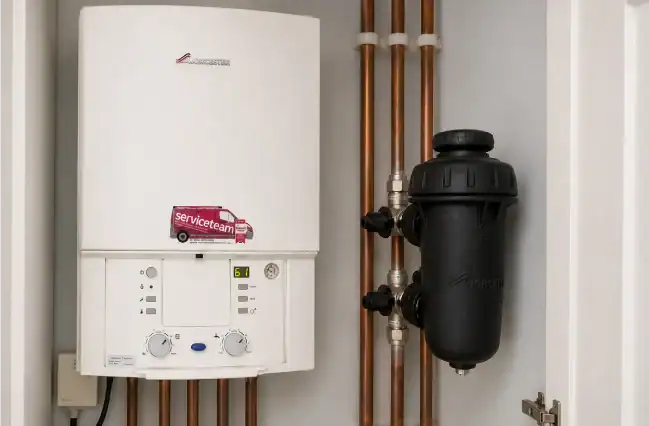
A magnetic filter is a small device fitted to your heating system’s return pipe. Its job is to pull metallic sludge out of the water before it reaches your boiler.
The inside of your pipes and radiators rusts over time, shedding tiny iron particles. Those particles mix with other debris and turn into the thick black sludge that blocks radiators and wears out your pump. The filter holds a strong magnet that grabs the iron and steel as water passes through, and keeps it trapped.
You’ll see a few names for the same thing. Boiler filter is the generic term. MagnaClean is a leading brand, often used as shorthand for the whole category. Central heating filter is another name for it.
Are they worth it? The short answer
Yes, for most homes. That’s especially true in London, where heating systems get heavy year-round use.
A filter is a small upgrade that protects an expensive bit of kit. It won’t rescue a system that’s already full of sludge, but as a preventative measure it does a lot of work for the money. The exceptions are covered further down.
What you get for the money
A working filter pays you back in a few ways. You get fewer breakdowns and repair call-outs. You get lower energy bills, because a clean system doesn’t have to run as hard to heat your home. Your boiler and pump last longer. And most manufacturers now extend their guarantees if a filter is fitted at installation.
Left unchecked, sludge can halve a boiler’s life. Instead of lasting 10 to 15 years, an unprotected system can fail far sooner.
A clean system also means fewer reasons to call out a boiler repair engineer.
How much does a magnetic boiler filter cost?

Cost depends on the brand, the model and how tricky the install is. As a rough guide, the filter kit itself runs about £75 to £200 for parts only. Installation adds around £100 to £250 if you’re retrofitting, though it’s usually included when you replace a boiler. Cleaning is covered during your annual service.
It’s an extra outlay up front. But set against avoiding emergency call-outs, repeat powerflushes or a full system replacement, it’s good value over the life of the boiler.
MagnaClean and the other filters worth knowing
There are several solid brands, and the right one depends on your system and the space around your boiler. Always let a Gas Safe engineer confirm the choice.
The Adey MagnaClean 2 is the most recognised name, with a 10-year warranty, flexible flow direction and quick-fit installation. The Fernox TF1 Omega is compact and good for tight spaces, and catches both magnetic and non-magnetic debris. The Worcester Bosch Greenstar magnetic filter is a popular installer choice, with a strong magnet, simple fitting and built-in isolation valves.
When fitting one makes sense (and when it won’t help)

The best time to fit a filter is when you install a new boiler, or straight after a powerflush. Either way it protects a clean system from day one.
If your system already has sludge, a filter on its own won’t clear it. You’ll need a powerflush first to shift the existing buildup, then the filter keeps things clean going forward.
It’s worth thinking seriously about one if you’re seeing cold radiators that don’t improve after bleeding, gurgling or banging from the boiler, leaks or pooling water beneath it, or cloudy tap water and repeated pump failures. Those point to sludge that’s either already there or building fast.
Fitting is a job for a Gas Safe registered engineer, not a DIY task. Done properly, it protects your boiler and keeps your warranty intact.
The downsides, honestly
No filter is perfect. There’s an upfront cost. It’s not a substitute for a powerflush if heavy sludge is already present. And it needs cleaning from time to time. None of these is a dealbreaker, and the long-term savings outweigh them, but it’s fair to know them before you buy,
Keeping it working
A filter isn’t a fit-and-forget job. To keep doing its work, it needs cleaning.
The easiest route is to let your engineer clean it during your annual boiler service, where it’s a standard part of the visit. In colder months, a quick check every month or so doesn’t hurt.
For the wider picture on looking after your system, see our boiler servicing and maintenance guide.
No filter removes every last bit of debris, but with one in place you’re cleaning the filter rather than the whole system.
The verdict
A magnetic boiler filter is one of the cheapest, most proven ways to extend the life of your heating system, lower your bills and cut the risk of breakdowns. Whether you’re fitting a new boiler or futureproofing a clean one after a powerflush, it’s a sensible buy for any London homeowner or landlord.
Thinking about fitting a filter?
If you’re weighing one up, talk to Serviceteam. Our Gas Safe engineers can recommend the right filter for your system, give you a clear cost estimate, and fit it properly anywhere in London