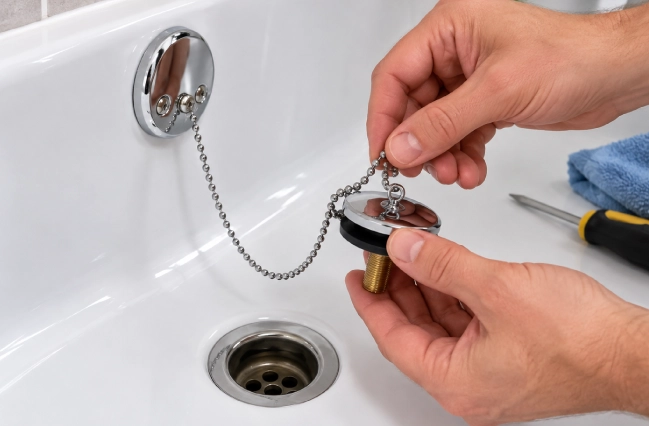
A faulty bath waste plug can cause leaks, poor drainage and unnecessary frustration. Replacing it is often a straightforward DIY job if you have the right replacement and a few basic tools.
This guide explains how to replace a bath waste plug, remove the old fitting safely and deal with common problems that can come up during the job.
- Content Guide
- » What Is a Bath Waste System?
- » Tools You'll Need
- » How to Replace a Bath Waste Plug
- » How to Remove a Bath Waste Plug Only
- » Common Problems and Fixes
- » Choosing the Right Bath Waste Plug
- » Can You Replace a Bath Plug Hole?
- » How to Plug a Bath Without a Plug
- » When to Call a Professional
- » Looking After Your Bath Waste Plug
- » Frequently Asked Questions
- » Need Help With a Bath Waste Plug or Blocked Drain?
What Is a Bath Waste System?
A bath waste system carries used water from the bath into the waste pipe. It normally includes the bath waste beneath the plug hole, the overflow connection, and the waste pipe leading to the trap. Most UK baths use a standard 40mm waste fitting, but always measure before buying replacement parts. If the bath is draining slowly because the waste is blocked rather than damaged, replacing the plug won't solve the problem — see our guide to blocked drains, toilets and Saniflo problems to understand the most common causes and solutions.
Tools You'll Need
- Flat screwdriver
- Drain removal tool or pliers
- Silicone sealant and silicone gun
- Cleaning cloths
- Pipe cutter or hacksaw (if required)
- Channel-lock pliers
- Compression fittings
- Basin wrench
Having everything ready makes the installation much easier.
How to Replace a Bath Waste Plug
Step 1: Access the Bath
Remove the bath panel if fitted.
Step 2: Choose the Correct Replacement
Match the new waste to your existing setup before removing anything.
Step 3: Remove the Old Waste
Unscrew the old fitting. If sealant is holding it in place, carefully cut through it without damaging the bath.
Step 4: Remove the Overflow
Disconnect the overflow assembly from the waste.
Step 5: Clean the Area
Remove old silicone, dirt and debris so the new waste seals properly.
Step 6: Install the New Waste
Apply fresh silicone around the waste opening before fitting the new waste. Tighten securely without overtightening.
Step 7: Reconnect the Overflow
Reconnect and seal the overflow pipe.
Step 8: Test for Leaks
Fill the bath and inspect every joint underneath before replacing the bath panel.
How to Remove a Bath Waste Plug Only
If you're only replacing the plug rather than the complete waste, lift the plug with a flat screwdriver, remove the flange with pliers or a removal tool, unscrew the old fitting, and inspect for damage before fitting the replacement.
Common Problems and Fixes
Bath Waste Plug Leaking
Check the rubber seals, silicone and compression fittings. Tighten any loose connections before testing again.
Bath Plug Blocked
Hair and soap residue are common causes. Remove the debris before assuming the waste needs replacing. If the bath waste is blocked and can't be cleared safely, our fixed-price toilet and sink unblocking service can help restore proper drainage.
Lost Bath Plug
A universal replacement plug can be used temporarily until you buy the correct fitting.
Wrong Plug Size
Although many baths use a 40mm waste, always measure yours before ordering a replacement.
Choosing the Right Bath Waste Plug
Push-button and click-clack wastes suit modern bathrooms, while plug-and-chain designs remain a popular traditional choice. Choose a durable finish such as chrome or brass for longer service life.
Can You Replace a Bath Plug Hole?
Yes. If the waste fitting or flange is damaged, replacement kits are widely available. As long as the bath itself isn't damaged, replacing the waste assembly is usually straightforward.
How to Plug a Bath Without a Plug
A temporary rubber stopper, waterproof cover or universal plug can work until a permanent replacement is fitted. These are short-term solutions only.
When to Call a Professional

Professional help is worth considering if the waste pipe has been glued or soldered, leaks continue after replacing seals, you can't access the underside of the bath, or the problem turns out to be a blocked waste pipe rather than the plug itself. If your bathroom includes a Saniflo or macerator system, repairs should be carried out using the correct replacement parts. If your bath waste connects to a Saniflo system, our Saniflo macerator repair service can diagnose faults and replace failed components where needed.
Looking After Your Bath Waste Plug
Clean away hair and soap residue regularly, check the silicone seal every so often, and fix small leaks early before they become larger plumbing problems. Routine maintenance helps the waste last longer and reduces the risk of water damage.
Frequently Asked Questions
What is the plug in a bathtub called?It's called a bath waste plug or stopper, and it keeps water from draining out so you can enjoy a soak. Common types include rubber plugs, pop-up bath waste with overflow, and click-clack plugs.
How does a bath plug work?A bath plug seals the drain to stop water escaping from the bath. Depending on the type, it may need to be pushed, twisted or pressed to create a watertight seal.
How do you replace the bath plug and waste?Remove the old plug and waste, clean the area thoroughly, then install the new parts and seal them with silicone. If you're not confident with DIY, a plumber can carry out the replacement for you.
How do you plug a hole in a bathtub?For a quick fix, a waterproof cover or a temporary stopper can work. For anything more permanent, it's best to call a professional to repair or replace the damaged area.
How much does a bath waste plug replacement cost?The cost depends on the materials used and how complicated the job is. For an accurate price, it's best to get a quote based on your specific bath and waste system.
Need Help With a Bath Waste Plug or Blocked Drain?
Need help replacing a leaking bath waste plug or clearing a blocked bath drain? Serviceteam's London plumbers can diagnose the problem, replace faulty waste fittings and restore proper drainage. Get in touch to book a visit.