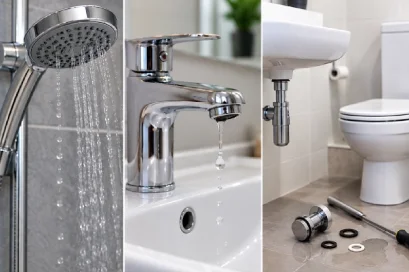
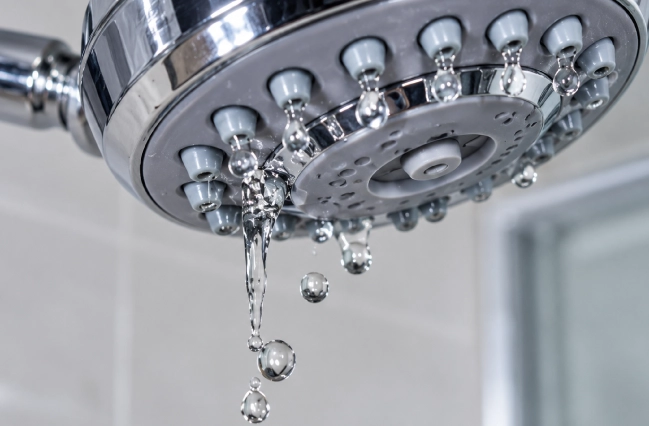
A dripping shower head is usually a small plumbing problem, but it can become difficult to ignore. A constant drip wastes water, can leave limescale around the shower and may point to a worn washer, seal or shower valve.
If your shower head is dripping when the water is off, the first step is to work out whether it is simply draining leftover water or whether the valve is allowing fresh water through. For related bathroom fixes, see our guide to shower, tap and bathroom fittings.
The good news is that some causes are easy to deal with yourself. Others need a plumber, particularly when the shower continues dripping after cleaning or replacing the accessible seals.
- Content Guide
- » Why Is My Shower Head Dripping?
- - Limescale and Mineral Build-Up
- - Worn Washers, O-Rings or Seals
- - A Worn Shower Valve
- - High Water Pressure
- - Debris and Sediment
- » Why Is My Shower Head Dripping When the Water Is Off?
- » How to Fix a Dripping Shower Head
- - Step 1: Turn Off the Water Supply
- - Step 2: Remove and Clean the Shower Head
- - Step 3: Check the Washer and Seals
- - Step 4: Refit the Shower Head
- - Step 5: Check the Shower Valve
- - Step 6: Check for Excessive Water Pressure
- » What You Need to Fix a Dripping Shower Head
- » How to Stop a Shower Head From Dripping Again
- » How Much Does It Cost to Fix a Leaking Shower Head?
- » When Should You Call a Plumber?
- » Shower Repairs in London
- » Frequently Asked Questions
Why Is My Shower Head Dripping?
Several problems can cause a dripping shower head. The most common are limescale, worn seals, valve problems, high water pressure and debris inside the shower mechanism.
Limescale and Mineral Build-Up
Limescale can build up inside the shower head and around its outlets. Over time, this affects water flow and can contribute to leaks around connections. Regular cleaning can remove some of this build-up and may be enough to stop a minor drip.
Worn Washers, O-Rings or Seals
Rubber washers and O-rings are designed to keep water inside the plumbing connections. They can become hard, cracked or misshapen through regular use and exposure to water and temperature changes. A worn seal can allow water to escape even when the fitting looks tight. Replacing the washer with the correct size is often a straightforward repair.
A Worn Shower Valve
The shower valve controls the flow of water to the shower head. If its internal components become worn, it may no longer shut off completely. This is one of the main things to consider when a shower head keeps dripping after the water has been turned off. If replacing the accessible washer does not solve the problem, the valve may need to be inspected or replaced. Valve work is generally better left to a qualified plumber.
High Water Pressure
Excessive water pressure can put additional strain on seals, valves and plumbing connections. This can contribute to leaks, particularly where fittings or components are already worn. If high pressure is suspected, the plumbing system should be checked before fitting a pressure-reducing valve. Installing one can involve work on the main water line and needs to be carried out correctly.
Debris and Sediment
Small particles and sediment can build up inside shower components. If they prevent a valve or seal from closing properly, the result can be a persistent drip. Cleaning the shower head is a useful first step, but debris inside the valve may require professional attention.
Why Is My Shower Head Dripping When the Water Is Off?

A shower head can continue dripping for a short time after the shower has been switched off because water is draining from the shower head and pipework. That is different from a shower head that keeps dripping continuously.
If the dripping continues for several minutes or repeatedly returns after the shower has been unused, the valve may not be shutting off correctly. A worn washer, damaged seal, limescale or an internal valve problem could be responsible. So, if your shower head is dripping when the water is off, check whether the flow gradually stops or continues at a steady rate. If it keeps dripping, cleaning the shower head and checking the accessible washer is a sensible starting point. If that does not help, the shower valve may need professional inspection.
How to Fix a Dripping Shower Head
The right repair depends on what is causing the leak. The following steps cover some of the simpler problems you can check yourself.
Step 1: Turn Off the Water Supply
Before taking the shower head apart, turn off the water supply where necessary. Depending on your plumbing system, the stopcock may be under the kitchen sink, in a utility cupboard or near the front door. Run the shower briefly afterwards to release any remaining water. Keep a towel or small bucket nearby to catch drips while you work.
Step 2: Remove and Clean the Shower Head
Use an adjustable wrench to loosen the shower head if needed. Wrap the fitting with a cloth first to help protect the finish. Hold the shower arm steady while removing the head. Avoid putting unnecessary force on the pipework. For limescale build-up, soak the removable shower head in a mixture of white vinegar and warm water. Around two hours may be enough for lighter build-up. Heavier deposits may need longer. Once the deposits have softened, use an old toothbrush to clean the outlets. Rinse the shower head thoroughly before refitting it.
Step 3: Check the Washer and Seals
Inspect the rubber washer where the shower head connects to the shower arm. If it is cracked, flattened, brittle or hard, replace it with a suitable replacement of the same size. You can also check accessible O-rings and seals for visible damage. Do not overtighten the fitting. Excessive force can damage threads or seals and create another leak.
Step 4: Refit the Shower Head
Once the shower head and washer are clean and in good condition, refit the head carefully. If the connection requires thread seal tape, use it appropriately on the threaded connection. Make sure the shower head is fitted securely without forcing it. Turn the water back on and check the connection for leaks.
Step 5: Check the Shower Valve
If your shower head still drips after cleaning and replacing the washer, the valve is worth checking. A faulty valve can allow water to pass through even when the shower is switched off. This can result in a shower head that keeps dripping rather than simply releasing the last water held in the pipe. Valve replacement can involve more complex plumbing work. If you are unsure which valve or component is causing the problem, it is safer to have it inspected by a qualified plumber.
Step 6: Check for Excessive Water Pressure
If the shower is suffering from repeated leaks or several plumbing fittings are showing signs of pressure-related problems, excessive water pressure may be contributing. A plumber can check the system and advise whether pressure needs to be reduced.
What You Need to Fix a Dripping Shower Head
For a basic shower head inspection or cleaning job, you may need:
- Adjustable wrench
- Soft cloth or rag
- Screwdriver, depending on the shower head
- Needle-nose pliers
- Replacement washer or O-ring
- Plumber's tape where appropriate
- White vinegar
- Bowl or container for soaking
- Old toothbrush
You may not need every item. The tools required depend on the type of shower and the cause of the drip.
How to Stop a Shower Head From Dripping Again
Once the immediate problem is fixed, regular maintenance can reduce the chance of another leak. Clean the shower head regularly to reduce limescale and mineral deposits. This is particularly useful in areas with hard water. Check the shower head connection and accessible seals from time to time. If a washer starts to look worn, replacing it early can prevent a more persistent leak. It is also worth paying attention to changes in water pressure. If several fittings begin leaking or the shower develops repeated problems, have the plumbing system checked rather than repeatedly replacing individual seals.
How Much Does It Cost to Fix a Leaking Shower Head?
The cost depends on what needs to be repaired. A simple DIY repair may cost around £5 to £20 for replacement washers, plumber's tape and cleaning materials. A professional repair for a straightforward dripping shower head may cost around £60 to £150, depending on the diagnosis, labour and parts required. More involved work, such as replacing a shower valve or dealing with a pressure problem, can cost around £200 to £500. These are guide figures rather than fixed prices. The actual cost depends on the shower type, the fault and the parts required.
When Should You Call a Plumber?

A dripping shower head does not always need professional help. Cleaning the head or replacing an accessible washer can solve some minor leaks.
You should consider professional help if:
- The shower head continues dripping after cleaning.
- Replacing the washer does not stop the leak.
- The shower drips continuously when the water is off.
- You suspect the shower valve is faulty.
- There is a leak around a concealed fitting.
- Several plumbing fittings are leaking.
- You suspect excessive water pressure.
- You cannot identify where the water is coming from.
A persistent drip can be a sign that the problem is further inside the shower system.
Shower Repairs in London
If cleaning the shower head and replacing the washer have not stopped the dripping, the problem may need a closer inspection. Serviceteam provides shower repairs in London for problems involving shower heads, fittings, valves and other shower components. For a persistent leak, a professional can identify the source of the problem and advise whether the affected component can be repaired or needs replacing. If you are planning a wider bathroom update, you may also need professional tap installation or replacement in London alongside the shower work.
Frequently Asked Questions
Why does my shower head drip after I turn it off?A shower head may drip briefly because water is draining from the shower head and pipework after use. If it continues dripping for an extended period, the valve, washer or another component may not be sealing correctly.
Why is my shower head still dripping when the water is off?If your shower head keeps dripping when the water is off, check the shower head for limescale and inspect the accessible washer or seal. If the drip continues, the shower valve may not be shutting off properly and may need professional inspection.
What does a leaking shower head mean?A leaking shower head can be caused by limescale, a worn washer, damaged seals, loose connections, debris or a faulty valve. The cause needs to be identified before choosing the right repair.
What should I do if my shower is leaking?Start by identifying where the water is coming from. Clean the shower head and check accessible washers and connections. If the leak continues, particularly when the shower is switched off, arrange a professional inspection.
Why does my shower head drip in the middle of the night?If a shower head starts dripping after it has been unused for some time, leftover water may be draining from the pipework. A persistent or recurring drip can also indicate a valve or sealing problem.
How much does it cost to fix a leaky shower head?A simple DIY repair may cost around £5 to £20. A professional repair may be around £60 to £150, while more involved work such as valve replacement can cost more. The final price depends on the fault and parts required.