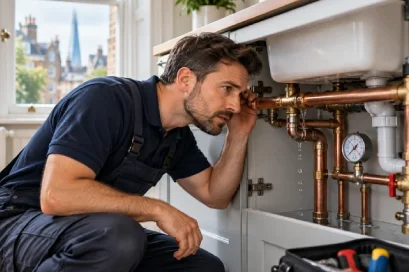
Act now. Do not read the rest of this page until you are outside.
- Put out all naked flames. Do not smoke. Do not use lighters, matches or candles.
- Do not touch light switches. Do not turn any appliance on or off. A small spark can ignite gas.
- If the gas meter is easy and safe to reach, turn off the gas at the emergency control valve. Turn the handle so it sits across the pipe. Do not go into a basement or enclosed space to do this.
- Open windows and doors as you leave.
- Get everyone out of the property, including children and pets.
- From outside, call the National Gas Emergency Service on 0800 111 999. The call is free and answered 24 hours a day.
- Stay outside. Do not go back in until an engineer tells you it is safe.
If anyone feels dizzy, sick or faint, or has collapsed, call 999. Call 999 as well if you see fire or hear an explosion.
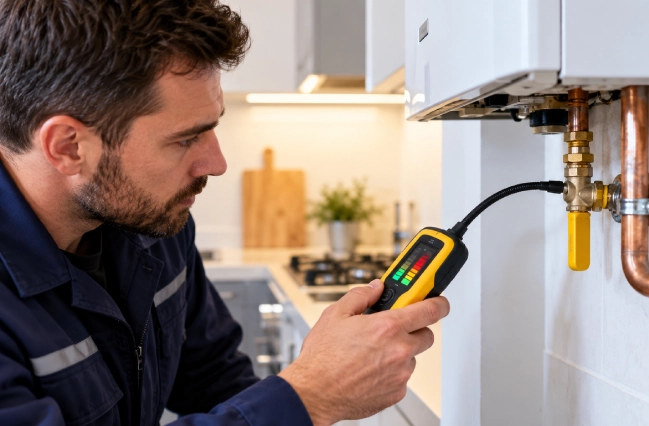
- Content Guide
- » How to Detect a Gas Leak: The Short Answer
- » Signs of a Gas Leak
- » Checking Your Home for Gas Leak Warning Signs
- » Preventing Gas Leaks: Regular Checks and Servicing
- » What Happens After a Gas Leak: Making Safe and Repairing
- » Gas Safety Certificates: What They Do and Do Not Tell You
- » Next Step: Get a Gas Safe Engineer to Find and Fix the Fault
How to detect a gas leak: the short answer
You detect a gas leak mainly by smell and sound. If you notice either, treat it as a live leak and follow the steps above. Natural gas has no smell of its own. Suppliers add a chemical so you can notice it. It smells like rotten eggs or sulphur. If you smell it, you do not need to find where it is coming from. Leave, and let the emergency service and a Gas Safe registered engineer deal with the source. A hissing or whistling sound near a pipe, the meter or an appliance is the second sign. Gas travels through pipework under pressure. A cracked pipe or loose fitting can make a noise as it escapes.
Three points matter more than anything else here:
- A faint smell still counts. Call the emergency number even if you are unsure.
- Do not test for a leak with a flame. Do not look for it with a lighter or a match.
- Do not try to repair a gas leak yourself. Gas work is illegal unless the engineer is on the Gas Safe Register.
The rest of this page explains what a leak can look like, how repairs are carried out, and what a gas safety certificate does and does not tell you.
Signs of a gas leak
Smell and sound come first. Other signs are less reliable on their own, but they are worth knowing.
Where leaks usually start
Leaks can start at joints, fittings, flexible hoses, appliances, meters or older pipework. In London homes and rental properties the common places are:
- The meter cupboard, especially where it is used for storage and items knock the pipework
- Hob and cooker connections, including flexible hoses
- Boilers, gas fires and water heaters that were poorly fitted or have not been serviced
- Older pipework that has corroded over time
Signs inside the property
- A smell of rotten eggs or sulphur
- A hissing or whistling sound near gas pipework or an appliance
- A pilot light that keeps going out
- A yellow or orange flame where you would normally see a steady blue one
- Black marks or soot around a boiler, fire or hob
Signs outside
A leak on a buried pipe may show outside. Look for bubbles in standing water, a hissing sound, or a dead patch of grass or plants over a pipe run. Wilting houseplants indoors can also point to a problem, but they have many other causes. Do not rely on them. If you suspect a leak outside, call the same emergency number.
Symptoms in people
A gas leak can cause headaches, dizziness, nausea, tiredness, breathing difficulty and sore eyes or throat. If several people in the property feel unwell at the same time, leave and call for help.
Gas leak and carbon monoxide are different problems
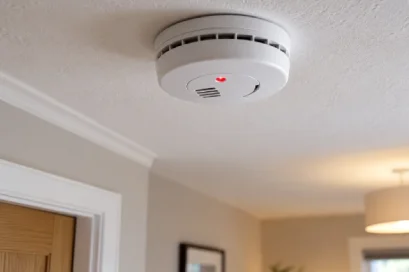
A gas leak is unburnt gas escaping. Carbon monoxide (CO) is a poisonous gas produced when a fuel does not burn properly. CO has no smell, no colour and no taste. You cannot detect it with your nose. A CO alarm that meets the British Standard is the only reliable warning. Fit one in any room with a gas appliance. If the alarm sounds, or you suspect CO, get outside into fresh air and call 0800 111 999. Call 999 if anyone is unwell.
Checking your home for gas leak warning signs

Your nose and ears are the first line of defence. Most people who notice a leak do so because of the smell, so it helps to know it before you ever need it. Our separate guide sets out the ways to detect a gas leak at home in more detail. It covers the smell, the sound, appliance warning signs, damaged pipework and the physical symptoms, with what to do after you notice each one.
Use it for one purpose: to recognise a problem early. It is not a way to locate a leak and fix it yourself. Once you notice a sign, the next step is always to call for help, not to investigate.
A few habits make early detection easier:
- Keep the meter cupboard clear of stored items.
- Check hob and cooker connections for damage when you clean behind them.
- Do not ignore a pilot light that keeps going out.
- Book an annual service for every gas appliance.
Preventing Gas Leaks: Regular Checks and Servicing
The best way to reduce the risk of gas leaks is to keep your appliances, pipework and ventilation properly maintained.
- Have every gas appliance serviced annually by a Gas Safe registered engineer. Regular servicing helps identify faults early, although it cannot eliminate every risk of a gas leak.
- Keep appliance vents and flues clear so that gas appliances can operate safely.
- Keep the gas meter cupboard free of stored items to prevent accidental damage to pipework and connections.
- Never block permanent ventilation openings, as gas appliances need an adequate supply of air to operate safely.
If you are a landlord, you must arrange a gas safety check every 12 months for the gas appliances and flues you provide to tenants. The engineer will issue a Landlord Gas Safety Record, commonly known as a CP12. A standard boiler service does not automatically include this separate safety check and record.
Remember that a carbon monoxide alarm only detects carbon monoxide (CO). It will not detect an unburnt natural gas leak. If you smell gas or suspect a leak, leave the property immediately and follow the emergency safety steps above.
What happens after a gas leak: making safe and repairing
Two different people may attend, and they do different jobs. The National Gas Emergency Service sends an engineer from the gas network. Their job is to make the situation safe. They check for gas, and they can isolate or cap the supply. They do not usually repair pipework or appliances inside your property. The repair belongs to a Gas Safe registered engineer. Gas work in the UK is only legal for engineers on the Gas Safe Register. Ask to see their Gas Safe ID card, and check the back of it to confirm they are qualified for the work. An unqualified repair is a risk to everyone in the building.
A proper repair usually follows this order:
- Isolate the supply and make sure the area is ventilated.
- Find the source of the leak.
- Repair or replace the faulty fitting, hose, pipe or appliance connection.
- Carry out a tightness test on the pipework.
- Check the connected appliances.
- Restore the gas supply and confirm everything is working safely.
The detail depends on where the fault is. Our gas leak repair guide explains what repair involves, so you know what to expect before an engineer arrives. If you need an engineer to find and fix the fault, Serviceteam provides emergency gas leak repair across London.
Gas safety certificates: what they do and do not tell you
A gas safety certificate is a record of a check. It is not a guarantee that a leak cannot happen later. For landlords, gas appliances and flues they own and provide for tenants must be checked every 12 months by a Gas Safe registered engineer. Pipework must also be maintained safely, and your engineer can advise what testing or repair is needed. Tenants must receive a copy of the record within 28 days of the check. New tenants must receive a copy before they move in. Homeowners are not legally required to hold a certificate for their own home. An annual service by a Gas Safe registered engineer is still the best way to catch faults early.
Many people misunderstand what the paper covers. A certificate shows the condition of the appliances and flues the engineer checked, on the day they checked them. It does not cover an appliance that was not on the record. It does not protect against damage that happens afterwards, such as a knocked fitting in a meter cupboard. Our guide to the misconceptions about gas safety certificates sets out the most common mistakes landlords and homeowners make. Read it if you manage a rental property or are unsure what your certificate covers. A valid certificate does not make a smell of gas safe to ignore. If you smell gas, follow the steps at the top of this page.
Next step: get a Gas Safe engineer to find and fix the fault
If you smelled gas, call 0800 111 999 from outside first. Everything else comes after that. Once the property is safe and the gas supply has been made safe, the fault still needs to be found and repaired. Do not turn the gas back on yourself and do not use the affected appliance until a Gas Safe registered engineer has checked it. Serviceteam's Gas Safe registered engineers carry out emergency gas leak repairs in London for homeowners and landlords. They trace the leak, repair it and test the work. The gas supply is restored once the tests pass. The service runs 24/7 for homes and commercial properties. If you manage a rental property, ask for the details of the work to be recorded so you have a clear record for your tenants and your own files. If you did not smell gas but noticed one of the warning signs above, do not wait. Book an engineer through our emergency gas leak repairs page or call 0208 059 8111, and have the appliance or pipework inspected.